Roof Ventilation Problems in Eugene & Lane County
Roof ventilation problems in Eugene, Oregon, can contribute to excess attic moisture, condensation, and premature deterioration of roofing materials. In Western Oregon’s wet climate, understanding how your attic ventilation system works is an important part of protecting your home.
At RoofCraft Inc., we help homeowners throughout Eugene, Springfield, and Lane County evaluate roofing systems, identify possible ventilation concerns, and understand their options. Our goal is to recommend practical solutions based on the condition and construction of your roof—not unnecessary work.
Request Your Free Roofing Estimate
Prefer to speak with us? Call 541-762-7663.
Why Proper Roof Ventilation Matters in Oregon
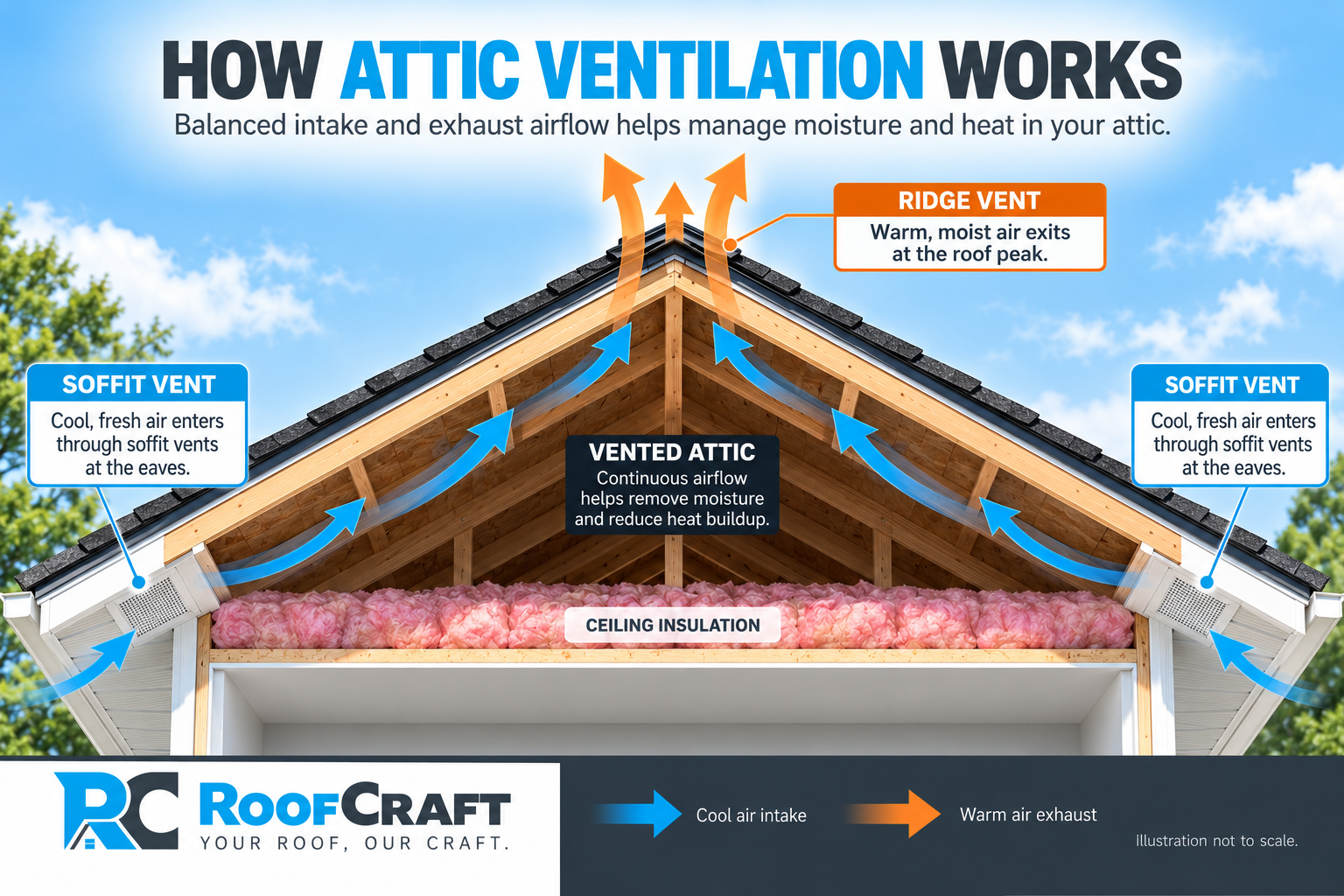
A properly designed attic ventilation system allows outside air to enter through intake vents, commonly located near the eaves or soffits, and exit through exhaust vents positioned higher on the roof. This airflow can help remove moisture and reduce heat buildup in a vented attic.
In Eugene and Lane County, prolonged periods of cool, damp weather make moisture management especially important. Warm, humid air escaping from living spaces into a cold attic may condense on roof sheathing and other surfaces. Ventilation can help manage moisture, but it must work together with appropriate air sealing, insulation, and properly routed exhaust ducts.
Warning Signs of Poor Attic Ventilation
Ventilation problems aren’t always visible from outside the home. Some of the warning signs homeowners may notice include:
- Condensation or moisture on attic roof sheathing
- Musty odors in the attic
- Mold-like growth or staining on wood surfaces
- Rust or corrosion on exposed metal fasteners
- Excessive attic heat during warm weather
- Wet or deteriorating insulation
- Repeated moisture problems during cold weather
These symptoms do not automatically mean that more roof vents are needed. Roof leaks, bathroom exhaust fans venting into the attic, and air leakage from the living space can create similar conditions. Identifying the actual source is essential before recommending repairs.
Common Roof Ventilation Problems
Blocked or Insufficient Intake Ventilation
Soffit vents and other intake openings can become blocked by insulation, debris, or construction materials. Without an adequate intake pathway, exhaust vents may not perform as intended. Properly installed attic baffles can help maintain airflow where insulation meets the roof deck.
Improperly Balanced Intake and Exhaust
Adding exhaust vents without considering intake capacity can create an unbalanced ventilation system. The appropriate amount and distribution of ventilation depend on attic size, roof design, applicable building requirements, and manufacturer instructions.
Poorly Positioned or Incompatible Roof Vents
Combining different types of exhaust vents or positioning them incorrectly can disrupt intended airflow. Ridge vents, box vents, and powered ventilation systems should be evaluated as parts of a complete system rather than individually.
Bathroom or Dryer Exhaust Entering the Attic
Bathroom fans and clothes dryers must discharge appropriately to the outdoors rather than releasing moisture into attic spaces. Improperly terminated ducts can contribute to condensation, damp insulation, and wood deterioration.
Air Leakage and Insulation Issues
Gaps around attic hatches, recessed fixtures, plumbing penetrations, and other openings can allow warm interior air to reach colder attic surfaces. Air sealing and insulation improvements may be necessary alongside ventilation corrections.
Ridge Vents, Box Vents, and Soffit Vents: What’s the Difference?
Ridge vents are installed near the roof peak and can provide continuous exhaust ventilation when the roof design and intake system are suitable.
Box vents are individual exhaust vents installed near the upper portion of the roof. Their number and placement must be designed to provide appropriate ventilation.
Soffit vents are typically located beneath the eaves and supply intake air to the attic. Without adequate intake, an exhaust ventilation system may be less effective.
Not every roof is suitable for every vent type. Low-slope roofs, complex rooflines, cathedral ceilings, and unvented attic assemblies may require different approaches. RoofCraft evaluates the roofing configuration before recommending ventilation changes.
Can Poor Ventilation Shorten the Life of Your Roof?
Excessive heat and persistent moisture can contribute to deterioration of roof decking, fasteners, and other roofing components. Poor ventilation may be one contributing factor, although roofing material lifespan also depends on installation quality, product selection, weather exposure, and maintenance.
Ventilation alone cannot correct an existing roof leak or reverse damaged roof sheathing. When moisture or deterioration is discovered, it’s important to evaluate the entire roofing assembly and address the underlying cause.
If you are also experiencing water intrusion, learn about our roof leak repair services in Eugene and roof repair options.
How RoofCraft Evaluates Ventilation Problems
- Discuss the symptoms. We ask about condensation, staining, musty odors, and other concerns.
- Review accessible roof and attic conditions. Where access is available, we assess visible ventilation components, roofing materials, and signs of moisture.
- Identify potential contributing factors. We consider intake and exhaust ventilation, roof design, and possible sources of water intrusion.
- Explain recommended next steps. We discuss appropriate roofing repairs or ventilation improvements and identify when additional insulation, air-sealing, or moisture evaluation by another specialist may be needed.
We want homeowners to understand the problem before investing in a solution. When roof replacement is necessary, ventilation planning can also be part of the overall roofing project.
Frequently Asked Questions About Roof Ventilation
Does every roof need a ridge vent?
No. Ridge vents are one possible exhaust ventilation option. The best system depends on roof geometry, available intake, attic configuration, and other design considerations.
Can too much roof ventilation cause problems?
Improper vent placement, incompatible exhaust systems, or unbalanced airflow can cause problems. Ventilation should be designed as a complete system rather than simply adding more openings.
Will adding vents eliminate attic mold?
Not necessarily. Existing microbial growth may require separate assessment or remediation, and the moisture source must be identified. Ventilation improvements alone may not solve the underlying problem.
Is attic condensation the same as a roof leak?
No. Condensation occurs when moist air contacts a sufficiently cold surface. Roof leaks involve water entering through the roofing system. Both can cause stains and damp materials, so proper diagnosis is important.
Can roof ventilation be improved without replacing the roof?
Sometimes. Depending on the existing roofing materials and roof configuration, certain ventilation improvements can be completed without full replacement. An inspection helps determine the practical options.
Roof Ventilation Services in Eugene and Lane County
RoofCraft Inc. serves homeowners in Eugene, Springfield, and surrounding Lane County communities. Whether you’re concerned about attic moisture, roof deterioration, or ventilation during a planned roof replacement, our team can help evaluate roofing-related concerns and recommend appropriate next steps.
Request Your Free Roofing Estimate
Call 541-762-7663 | Oregon CCB #209915
Explore our roof replacement services and complete roofing services.
For additional information about improving home energy efficiency and managing attic moisture, visit the U.S. Department of Energy’s home insulation guidance.
RoofCraft Inc. — Your Roof, Our Craft.